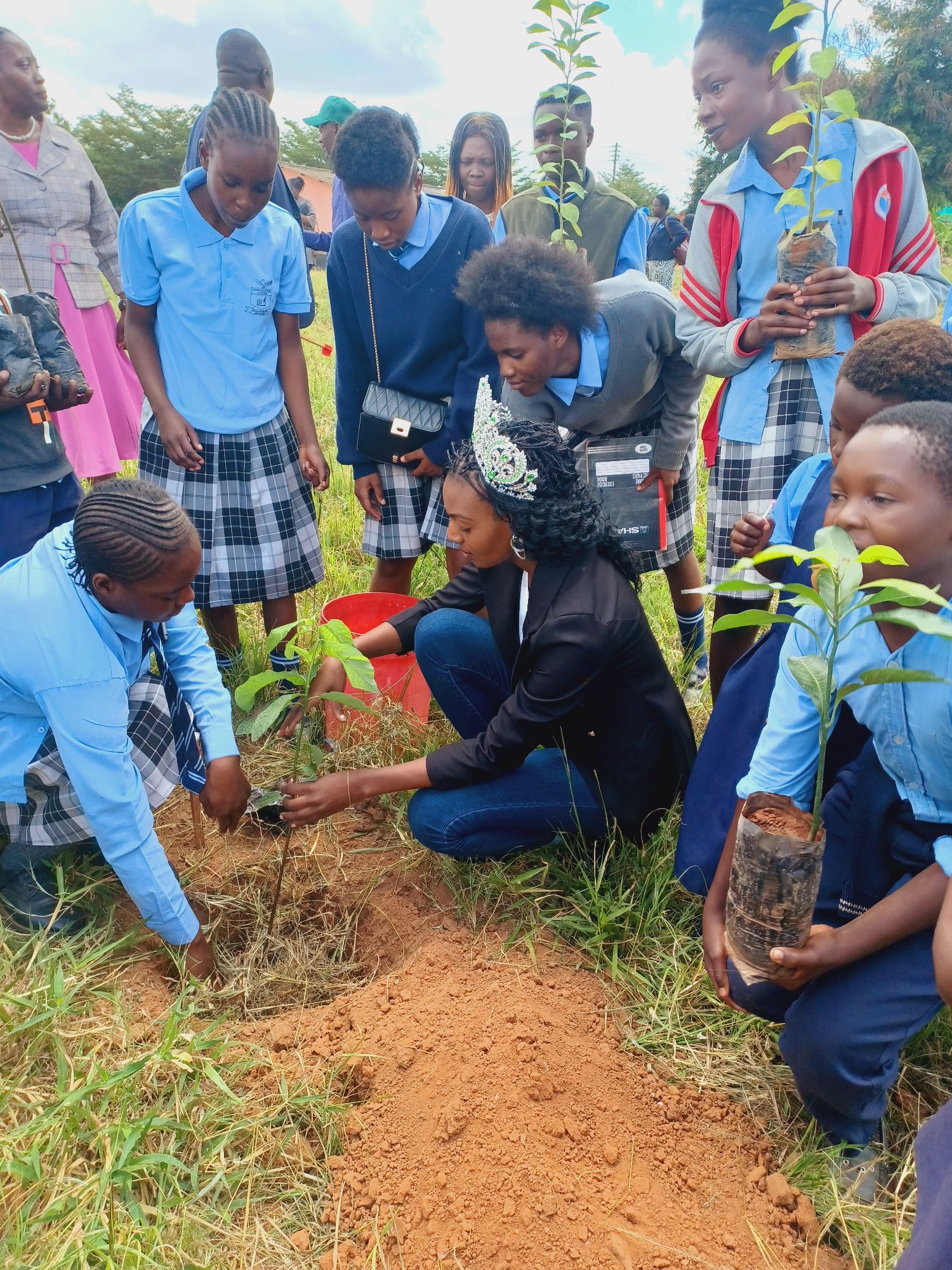
Educating people about the ecological importance of trees and the care they require is essential. Schools, NGOs, and local governments can play a critical role in fostering a culture of responsibility and stewardship. When individuals and communities understand the long-term benefits of thriving trees, they are more likely to commit to their care.
Long-Term Impacts of Thriving Trees
We took this task on with asked Miss Earth to come along and speak to the school children at Munkolo School in Lusaka. When given the chance to grow and mature, trees contribute immeasurably to the environment and society. Some of their key long-term benefits include:
Economic Benefits: From timber and fruits to ecotourism, thriving trees contribute to local economies.

Carbon Sequestration: Mature trees absorb significantly more carbon dioxide than saplings.
Biodiversity: Healthy trees support a wide range of wildlife, from birds to insects.
Air Quality: Trees filter pollutants, improving air quality in urban and rural areas.
Climate Resilience: Forested areas help moderate local temperatures and reduce the impact of extreme weather events.
 The Mupapa Initiative